

In this world of interconnectivity and instant results, cultivating patience can feel almost antithetical.
I was talking to an impatient new mum yesterday and remembering how many stages my son went through as a baby and how each step seemed to persist for a very long time. The crying at 1.00am seemed to go on forever. In reality, it was probably over in less than 12 weeks. The throwing food on the floor stage lasted …, well a few months.
In retrospect, I would like to say to the younger me, "relax, be patient, enjoy". "Whatever you do, however you respond, these stages will pass, sometimes slowly and sometimes quickly."
I was talking to an impatient new mum yesterday and remembering how many stages my son went through as a baby and how each step seemed to persist for a very long time. The crying at 1.00am seemed to go on forever. In reality, it was probably over in less than 12 weeks. The throwing food on the floor stage lasted …, well a few months.
In retrospect, I would like to say to the younger me, "relax, be patient, enjoy". "Whatever you do, however you respond, these stages will pass, sometimes slowly and sometimes quickly."
We are about to enter week 3 of the 8-week MBSR class I am currently teaching. By now many participants are struggling with impatience.
"I try and meditate and watch the clock". "It feels like it goes on forever". "Sometimes I feel like there are more important things to be doing". Taking the time out for even a short 15-minute meditation practice can lead to a feeling that time is slowing down. 15 minutes can feel like an hour. This is a perfect opportunity to cultivate patience. But why would we want to do this?
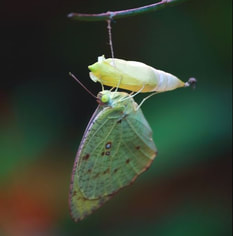
Patience is often a form of wisdom. When we are patient, we know and accept that things often unfold in their own time. I remember as a child excitedly holding a butterfly pupa and breaking it open. This impatience killed the butterfly which needs to cut its own chrysalis and come out in its own time.
It can be helpful to cultivate this same quality of patience for everything that arises in mindfulness practice. We might intentionally remind ourselves to be patient with a wandering mind, repetitive thoughts, feelings of tension or fear, and when impatience arises in the form of thoughts like, “this is boring” or “ what am I achieving by doing this”.
When we are patient, we can turn towards these unpleasant thoughts and sensations in the body and give ourselves room to experience them. Why? Because they are there, they are our reality at that moment. They are the life that is happening.
When we are patient and refrain from rushing through the current moment to get to a better one, we allow ourselves the same nurturing space that we might give to the butterfly in its chrysalis.
When we practice in this accepting and allowing way, we may be surprised by what eventuates, what we discover and what transforms. We may find that under irritation is sadness or tiredness and that as we begin to know that this is so, these feelings may also change.
Often we avoid what we experience as unpleasant, and this avoidance can take effort, a bit like holding a basketball under water. Being patient and turning towards our experience (and releasing that basketball) can offer relief.
Meditation practice is training for those moments in life when we are agitated, irritated or ruminating. Patience can help us accept the tendency of the mind to wander and at the same time remind us that we don’t need to get caught up in its travels.
Patience can also bring delight by allowing us to notice some of the smaller pleasant moments in life that we might ordinarily miss as we rush on to the next important thing. The smell of freshly mown grass or the shrieks of children as you walk past a school playground.
Practising patience helps us remember that to experience our life we need to slow down enough to show up for it. It can remind us that a life that is spacious and not too full of activity and thinking can be a rich and rewarding life.
Being patient can allow us to remember that resting in each moment of our lives is valuable and that many things, like the butterfly, can only emerge in their own time.
"I try and meditate and watch the clock". "It feels like it goes on forever". "Sometimes I feel like there are more important things to be doing". Taking the time out for even a short 15-minute meditation practice can lead to a feeling that time is slowing down. 15 minutes can feel like an hour. This is a perfect opportunity to cultivate patience. But why would we want to do this?
Patience is often a form of wisdom. When we are patient, we know and accept that things often unfold in their own time. I remember as a child excitedly holding a butterfly pupa and breaking it open. This impatience killed the butterfly which needs to cut its own chrysalis and come out in its own time.
It can be helpful to cultivate this same quality of patience for everything that arises in mindfulness practice. We might intentionally remind ourselves to be patient with a wandering mind, repetitive thoughts, feelings of tension or fear, and when impatience arises in the form of thoughts like, “this is boring” or “ what am I achieving by doing this”.
When we are patient, we can turn towards these unpleasant thoughts and sensations in the body and give ourselves room to experience them. Why? Because they are there, they are our reality at that moment. They are the life that is happening.
When we are patient and refrain from rushing through the current moment to get to a better one, we allow ourselves the same nurturing space that we might give to the butterfly in its chrysalis.
When we practice in this accepting and allowing way, we may be surprised by what eventuates, what we discover and what transforms. We may find that under irritation is sadness or tiredness and that as we begin to know that this is so, these feelings may also change.
Often we avoid what we experience as unpleasant, and this avoidance can take effort, a bit like holding a basketball under water. Being patient and turning towards our experience (and releasing that basketball) can offer relief.
Meditation practice is training for those moments in life when we are agitated, irritated or ruminating. Patience can help us accept the tendency of the mind to wander and at the same time remind us that we don’t need to get caught up in its travels.
Patience can also bring delight by allowing us to notice some of the smaller pleasant moments in life that we might ordinarily miss as we rush on to the next important thing. The smell of freshly mown grass or the shrieks of children as you walk past a school playground.
Practising patience helps us remember that to experience our life we need to slow down enough to show up for it. It can remind us that a life that is spacious and not too full of activity and thinking can be a rich and rewarding life.
Being patient can allow us to remember that resting in each moment of our lives is valuable and that many things, like the butterfly, can only emerge in their own time.

As to my son, well he is no longer a baby throwing food on the floor, but his teenage bedroom is littered with smelly, dirty clothes. I know that I too did this as a teen, as have many generations of humans.
If I stop reacting and practice patience, I remember that as he inevitably grows up these behaviours are likely to change. When I am patient, I am less reactive with him. While I will still notice those irritating aspects of growing up, I am more able to discern what he also does well and to enjoy him. But it does take ... patience!
If I stop reacting and practice patience, I remember that as he inevitably grows up these behaviours are likely to change. When I am patient, I am less reactive with him. While I will still notice those irritating aspects of growing up, I am more able to discern what he also does well and to enjoy him. But it does take ... patience!
 RSS Feed
