

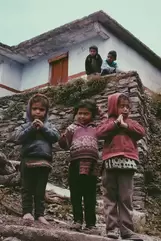
As you read this newsletter, I am trekking in Nepal. I walked in the Himalaya in my 20's and 30's and am visiting the mountains once more in my 50's before time takes me to an age and body where this is no longer possible.
One of the things I love in Nepal is the greeting “Namaste”. When I first heard the word, I loved the sound itself thinking it meant hello, how are you. Later, I learned that the meaning is, “From the divine in me, I acknowledge and bow to the divine in you”. I have never been very comfortable with
One of the things I love in Nepal is the greeting “Namaste”. When I first heard the word, I loved the sound itself thinking it meant hello, how are you. Later, I learned that the meaning is, “From the divine in me, I acknowledge and bow to the divine in you”. I have never been very comfortable with
big words like ‘divine’ or even the idea of 'bowing' to another but when walking in the majestic mountains, blanketed in pristine snow, it is somehow easier to make good sense of this, to have an easy appreciation of how amazing it is to be a unique human, meeting another unique human, with the astounding good fortune to be walking in these mountains'. Each meeting is a real greeting.
At other times in my life, it has not always been so easy to see the best or the ‘divine’ or maybe even the 'humanity' in others. It can be much easier to see the differences and to be critical or self-critical, especially when faced with aspects of ourselves or others that we do not like or agree with.
Saki from the Centre for Mindfulness reflects on seeing the 'namaste' in others and says, "I believe that the active remembrance of this reality is crucial to our lives, our work, and our well-being....We, and the person before us, are always more than that which appears...Perhaps our real job is to sustain this remembrance in the face of overwhelming proof to the contrary." When faced with what is difficult, it is even more important to pause and to say a hearty ‘namaste’ as an act of building bridges.
In an MBSR course we practice a philosophy of namaste. We bring mindfulness into meditation and our daily lives. We stop, slow down, focus on one thing at a time rather than multi-tasking, really listen to ourselves and to others with an attitude of kindness and acceptance.
At other times in my life, it has not always been so easy to see the best or the ‘divine’ or maybe even the 'humanity' in others. It can be much easier to see the differences and to be critical or self-critical, especially when faced with aspects of ourselves or others that we do not like or agree with.
Saki from the Centre for Mindfulness reflects on seeing the 'namaste' in others and says, "I believe that the active remembrance of this reality is crucial to our lives, our work, and our well-being....We, and the person before us, are always more than that which appears...Perhaps our real job is to sustain this remembrance in the face of overwhelming proof to the contrary." When faced with what is difficult, it is even more important to pause and to say a hearty ‘namaste’ as an act of building bridges.
In an MBSR course we practice a philosophy of namaste. We bring mindfulness into meditation and our daily lives. We stop, slow down, focus on one thing at a time rather than multi-tasking, really listen to ourselves and to others with an attitude of kindness and acceptance.
We practice being open to our experience whether it is pleasant or unpleasant and whether we like it or not. This is good training for the inevitable difficulties in life such as the pain and loss that all of us will face at some time. Opening to our experience with generosity and acceptance is also useful in the outside world. It is helpful when negotiating with people that we may or may not like and in living with policies that we may or may not agree with. This attitude of namaste allows us to listen, and be with, and get to know our experience and that of others, and then to respond rather than react.
Mindfulness practices may help us in approaching stress, depression, our relationships and our fears about the future without being overwhelmed. I have found them useful in giving me the courage to hold on to a sense of what is important, listen well and to step forward and act, even when I do not know if there will be a desired outcome.
The greeting ‘namaste’ alludes to our common humanity or our collective origins.
Here's a short practice from the book, Heal Thy Self, Lessons on Mindfulness in Medicine by Saki Santorelli in the spirit of "Namaste".
Paying Attention to the Space Between Us
If you're interested in attending one of our MBSR courses do book in. It is a well structured 8 week course that integrates a mindfulness meditation practice, mindfulness in daily life and western psychology with a view to stress reduction. The next course begins in Marrickville, Tuesday, Feb 18, 6.30pm-9.00pm. The early bird discount ends Jan 14. For more info www.headrest.com.au or trybooking to book.
Mindfulness practices may help us in approaching stress, depression, our relationships and our fears about the future without being overwhelmed. I have found them useful in giving me the courage to hold on to a sense of what is important, listen well and to step forward and act, even when I do not know if there will be a desired outcome.
The greeting ‘namaste’ alludes to our common humanity or our collective origins.
Here's a short practice from the book, Heal Thy Self, Lessons on Mindfulness in Medicine by Saki Santorelli in the spirit of "Namaste".
Paying Attention to the Space Between Us
- If you find yourself sometime this week sitting in the presence of a friend, family member, colleague, or patient, make a deliberate effort in these moments of shared space to attend to your breathing, to the feel and rhythm of the breath and the sensations in your body.
- Allow your curiosity to focus on those elements of the interaction that tend to draw you either away from or into a sense of connection.
- Notice the quality of the breath in each instance, allowing yourself to become curious about the nature of this personal inquiry
- See if you can pay attention to such things as the tone of your voice and the tendency to lose or to maintain the thread of the conversation depending on what s going on in your own mind and body, as well as bodily sensations such as tightness and porousness and mind states such as impatience, boredom, or curiosity.
- Notice if there is any connection between bodily sensations, mind states, the quality of the breath, and your actions and behaviours.
- Allow yourself the room to observe without judgment the intrapersonal dynamics occurring as the breath moves through cycles of inhalation and exhalation.
- Notice if there are times when you are no longer breathing freely and what is happening within and between the two of you in these moments.
- Be gentle with yourself, allowing your curiosity to be your guide.
If you're interested in attending one of our MBSR courses do book in. It is a well structured 8 week course that integrates a mindfulness meditation practice, mindfulness in daily life and western psychology with a view to stress reduction. The next course begins in Marrickville, Tuesday, Feb 18, 6.30pm-9.00pm. The early bird discount ends Jan 14. For more info www.headrest.com.au or trybooking to book.
 RSS Feed
